Hypertrophic Cardiomyopathy (HCM): Causes, Symptoms, Diagnosis & Treatment | Expert Heart Care in Erode
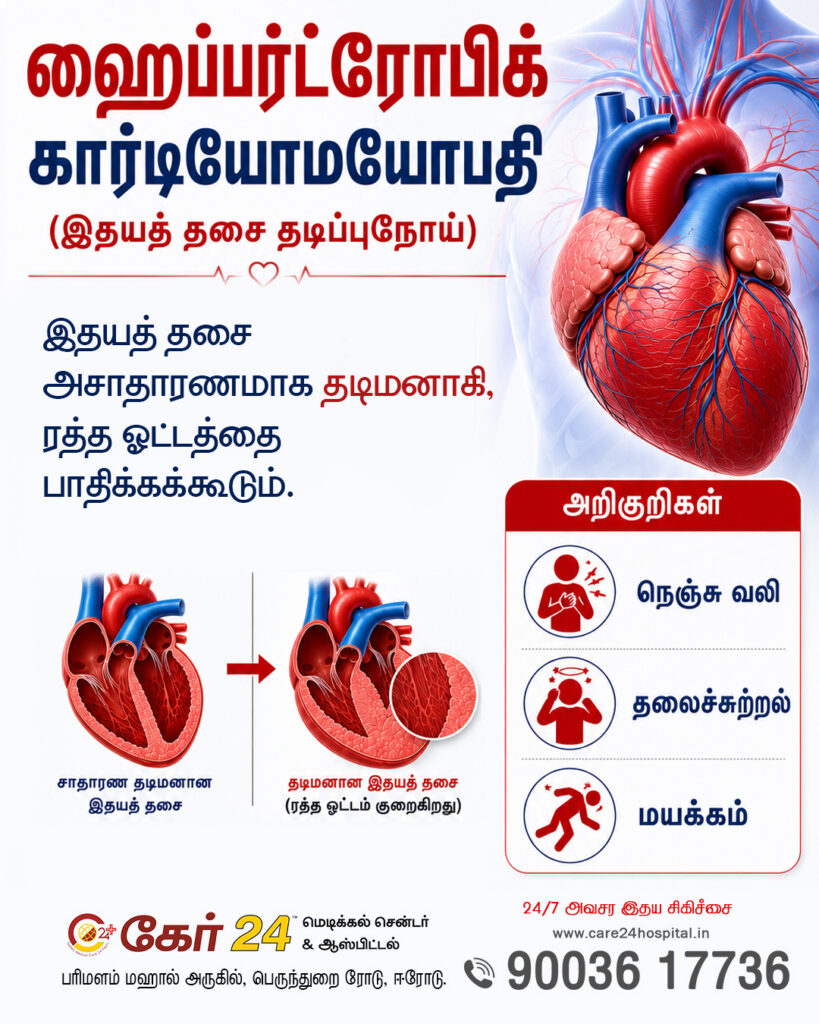
Hypertrophic Cardiomyopathy (HCM) is a condition in which the heart muscle becomes abnormally thick, making it harder for the heart to pump blood efficiently.
Hypertrophic Cardiomyopathy can affect people of all ages and may increase the risk of heart failure, abnormal heart rhythms, and sudden cardiac events if left untreated. Early diagnosis and timely treatment are essential for protecting heart health and improving long-term outcomes.
Although HCM is commonly inherited, early diagnosis and appropriate treatment can help people manage the condition effectively and reduce the risk of serious complications.
At Care 24 Medical Centre & Hospital, Erode, Dr. P. Vijay, MD., DNB (Cardiology), FSCAI, Full-Time Cardiac & Interventional Cardiologist, provides comprehensive evaluation and personalized treatment for patients with hypertrophic cardiomyopathy and other heart muscle disorders.
What is Hypertrophic Cardiomyopathy (HCM)?
Hypertrophic Cardiomyopathy (HCM) is a condition in which the heart muscle becomes abnormally thick (hypertrophied), most commonly affecting the wall of the left ventricle, the heart’s main pumping chamber.
As the muscle thickens, the heart has to work harder to pump blood throughout the body. In some individuals, the thickened muscle can partially block blood flow leaving the heart, while in others it may interfere with the heart’s electrical system, increasing the risk of abnormal heart rhythms.
HCM can affect people of all ages, including children, young adults, and athletes. In many cases, it is an inherited condition passed down through families.
How Does Hypertrophic Cardiomyopathy Affect the Heart?
A healthy heart contracts and relaxes efficiently to pump blood. In HCM, the thickened heart muscle reduces the space inside the heart chamber and may narrow the pathway through which blood exits the heart.
This can result in:
- Reduced blood flow to the body
- Increased workload on the heart
- Difficulty relaxing between heartbeats
- Abnormal heart rhythms (arrhythmias)
- Increased risk of heart failure in advanced cases
- Rarely, sudden cardiac arrest in high-risk individuals
What Causes Hypertrophic Cardiomyopathy?
The most common cause of HCM is genetic inheritance. Mutations in genes responsible for heart muscle proteins can cause abnormal thickening of the heart muscle.
Other contributing factors may include:
- Family history of HCM
- Inherited genetic mutations
- Certain metabolic disorders (rare)
- Age-related progression in genetically affected individuals
Because HCM often runs in families, close relatives of affected individuals should consider cardiac screening.
Symptoms of Hypertrophic Cardiomyopathy
The symptoms of Hypertrophic Cardiomyopathy often develop gradually. While some people remain symptom-free for years, others may experience chest pain, breathlessness, dizziness, fatigue, or heart palpitations as the condition progresses.
Chest Pain
Chest discomfort or pressure, particularly during exercise or physical activity.
Shortness of Breath
Breathlessness while walking, climbing stairs, or exercising due to reduced blood flow.
Heart Palpitations
A sensation of rapid, pounding, fluttering, or irregular heartbeats caused by abnormal electrical activity.
Dizziness or Fainting
Reduced blood supply to the brain may cause light-headedness or unexplained fainting episodes, especially during exertion.
Fatigue
Persistent tiredness and reduced exercise tolerance because the heart cannot pump blood efficiently.
Who is at Risk of Developing HCM?
You may have a higher risk if you:
- Have a family history of hypertrophic cardiomyopathy
- Have a close relative who experienced sudden cardiac death
- Experience unexplained fainting episodes
- Notice palpitations during exercise
- Are a young athlete with unexplained cardiac symptoms
- Have previously been diagnosed with a heart murmur
If HCM is diagnosed in a family member, screening first-degree relatives is strongly recommended.
How is Hypertrophic Cardiomyopathy Diagnosed?
Accurate Hypertrophic Cardiomyopathy diagnosis is essential for determining the severity of the condition and selecting the most appropriate treatment plan. Your cardiologist may recommend:
Electrocardiogram (ECG)
Detects abnormal heart rhythms and electrical changes associated with HCM.
Echocardiogram (2D Echo)
The most important test for HCM, using ultrasound to evaluate heart muscle thickness, blood flow, and heart function.
Cardiac MRI
Provides highly detailed images of the heart muscle and helps identify scar tissue and structural abnormalities.
Exercise Stress Test
Evaluates how the heart performs during physical activity and helps identify exercise-induced symptoms.
Holter Monitoring
Records the heart’s rhythm continuously over 24–48 hours to detect intermittent arrhythmias.
Genetic Testing
Recommended for individuals with a family history of HCM to identify inherited genetic mutations and guide family screening.
Treatment for Hypertrophic Cardiomyopathy
Treatment depends on the severity of symptoms, degree of obstruction, and overall heart function.
Medications
Medicines may be prescribed to:
- Slow the heart rate
- Improve blood flow
- Reduce chest pain
- Control abnormal heart rhythms
- Lower the risk of complications
Lifestyle Modifications
Simple lifestyle changes can significantly improve symptom control.
These include:
- Avoiding strenuous physical activity when advised
- Following a heart-healthy diet
- Controlling blood pressure
- Staying well hydrated
- Maintaining a healthy body weight
- Avoiding smoking and excessive alcohol
- Attending regular cardiology follow-up visits
Implantable Cardiac Devices
Some patients with a high risk of dangerous arrhythmias may benefit from an Implantable Cardioverter Defibrillator (ICD) to prevent sudden cardiac death.
Advanced Procedures
Patients with severe obstruction or persistent symptoms may require specialized procedures to improve blood flow and heart function.
Can Hypertrophic Cardiomyopathy Be Prevented?
Since HCM is usually inherited, it cannot always be prevented. However, early diagnosis, regular monitoring, appropriate treatment, and healthy lifestyle habits can greatly reduce complications and improve long-term outcomes.
Family members of individuals diagnosed with HCM should undergo screening, even if they have no symptoms.
When Should You See a Cardiologist?
Consult a cardiologist immediately if you experience:
- Persistent chest pain
- Shortness of breath during daily activities
- Frequent dizziness or fainting
- Irregular or rapid heartbeat
- Unexplained fatigue
- A family history of hypertrophic cardiomyopathy or sudden cardiac death
Seeking medical attention early allows timely treatment and significantly reduces the risk of serious complications.
Expert Hypertrophic Cardiomyopathy Care at Care 24 Medical Centre & Hospital, Erode
At Care 24 Medical Centre & Hospital, we provide comprehensive diagnosis and treatment for hypertrophic cardiomyopathy and other heart muscle diseases using advanced diagnostic technology and evidence-based cardiac care.
Our cardiac services are led by:
Dr. P. Vijay, MD., DNB (Cardiology), FSCAI Full-Time Cardiac & Interventional Cardiologist
Our Cardiac Services Include:
- Heart Health Screening
- ECG & Echocardiography
- Advanced Cardiac Imaging
- Hypertrophic Cardiomyopathy Evaluation
- Arrhythmia Assessment
- Heart Failure Management
- Preventive Cardiology
- Long-Term Cardiac Follow-up
If you experience chest pain, breathlessness, dizziness, palpitations, or have a family history of heart muscle disease, don’t delay your evaluation.
Book Your Appointment Today
Appointment: 90036 17736
Website: care24hospital.in
Care 24 Medical Centre & Hospital
Perundurai Road, Near Parimalam Mahal, Erode