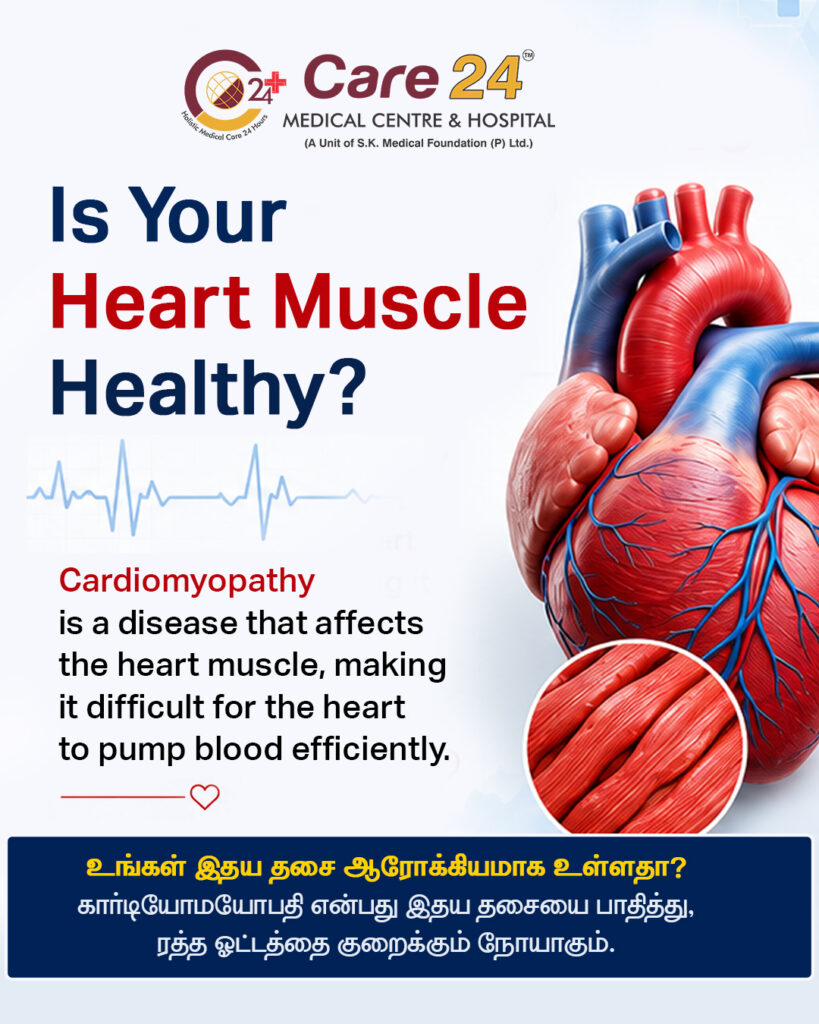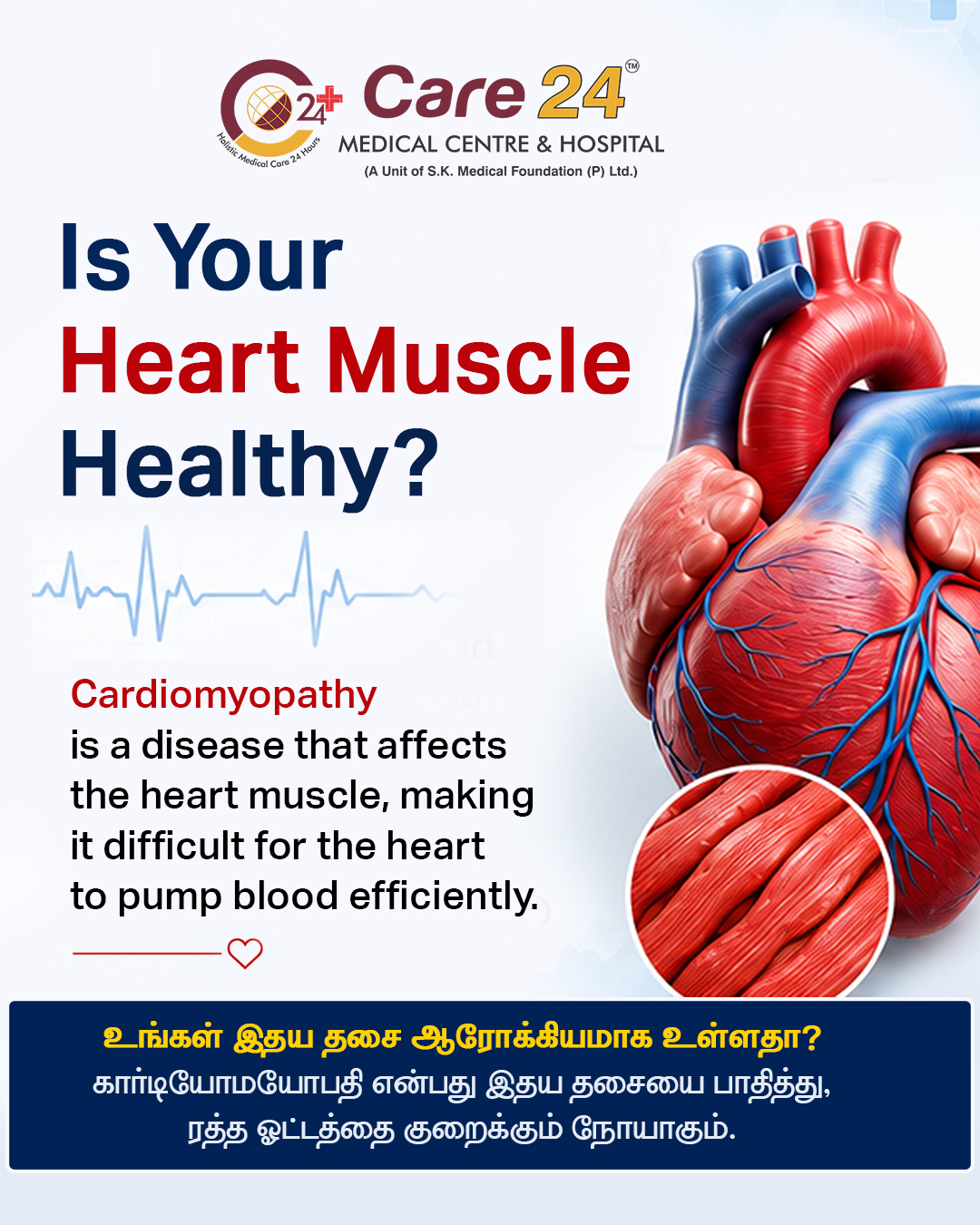
Heart diseases are often associated with blocked arteries, but not every heart condition is caused by cholesterol deposits or reduced blood flow. Cardiomyopathy is one such condition that affects the heart muscle itself, making it harder for the heart to pump blood efficiently.
If left untreated, cardiomyopathy can lead to heart failure, abnormal heart rhythms, stroke, or even sudden cardiac death. The encouraging news is that early diagnosis and appropriate treatment can help many people lead healthy and active lives.
At Care 24 Medical Centre & Hospital, Erode, our experienced cardiology team, led by Dr. P. Vijay, MD., DNB (Cardiology), FSCAI, offers comprehensive evaluation and personalized treatment for all types of cardiomyopathy.
What is Cardiomyopathy?
Cardiomyopathy is a disease that affects the heart muscle (myocardium). A healthy heart contracts and relaxes efficiently to circulate oxygen-rich blood throughout the body. In cardiomyopathy, the heart muscle may become weak, enlarged, thickened, or stiff, reducing its ability to pump blood effectively.
Unlike coronary artery disease, which occurs because of blocked blood vessels, cardiomyopathy develops within the heart muscle itself. This means a person can develop cardiomyopathy even if their coronary arteries are completely normal.
Without timely treatment, the condition may progress and increase the risk of:
Heart failure
Irregular heartbeats (arrhythmias)
Blood clot formation
Stroke
Sudden cardiac arrest in severe cases
Types of Cardiomyopathy
Cardiomyopathy occurs in different forms, and each type affects the heart differently.
Dilated Cardiomyopathy (DCM)
Dilated cardiomyopathy is the most common type. The heart chambers enlarge, causing the heart muscle to weaken and reducing its pumping ability.
Common causes include:
Genetic factors
Viral infections
Long-term high blood pressure
Excessive alcohol consumption
Certain medications
Hypertrophic Cardiomyopathy (HCM)
In hypertrophic cardiomyopathy, the heart muscle becomes abnormally thick, making it difficult for the heart to pump blood efficiently.
This condition is usually inherited and is one of the leading causes of sudden cardiac events in young adults and athletes.
Restrictive Cardiomyopathy
Here, the heart muscle becomes stiff and loses its flexibility. Although the pumping function may remain normal initially, the heart cannot fill properly between beats.
Possible causes include:
Scar tissue
Amyloidosis
Radiation therapy
Other infiltrative diseases
Arrhythmogenic Cardiomyopathy
This rare inherited condition causes healthy heart muscle to be gradually replaced by fatty or fibrous tissue, disrupting the heart’s electrical system and increasing the risk of dangerous arrhythmias.
Unclassified Cardiomyopathy
Some patients have forms of cardiomyopathy that do not fit into standard categories. These cases require specialized evaluation and individualized treatment.
What Causes Cardiomyopathy?
Cardiomyopathy may be inherited or develop later in life due to various medical conditions.
Common causes include:
Family history of cardiomyopathy
Long-standing high blood pressure
Diabetes
Thyroid disorders
Viral infections affecting the heart
Heavy alcohol consumption
Obesity
Chronic stress
Pregnancy-related heart muscle weakness (Peripartum Cardiomyopathy)
Certain chemotherapy medications
Previous chest radiation therapy
In many patients, no definite cause can be identified. This is known as idiopathic cardiomyopathy.
Symptoms of Cardiomyopathy
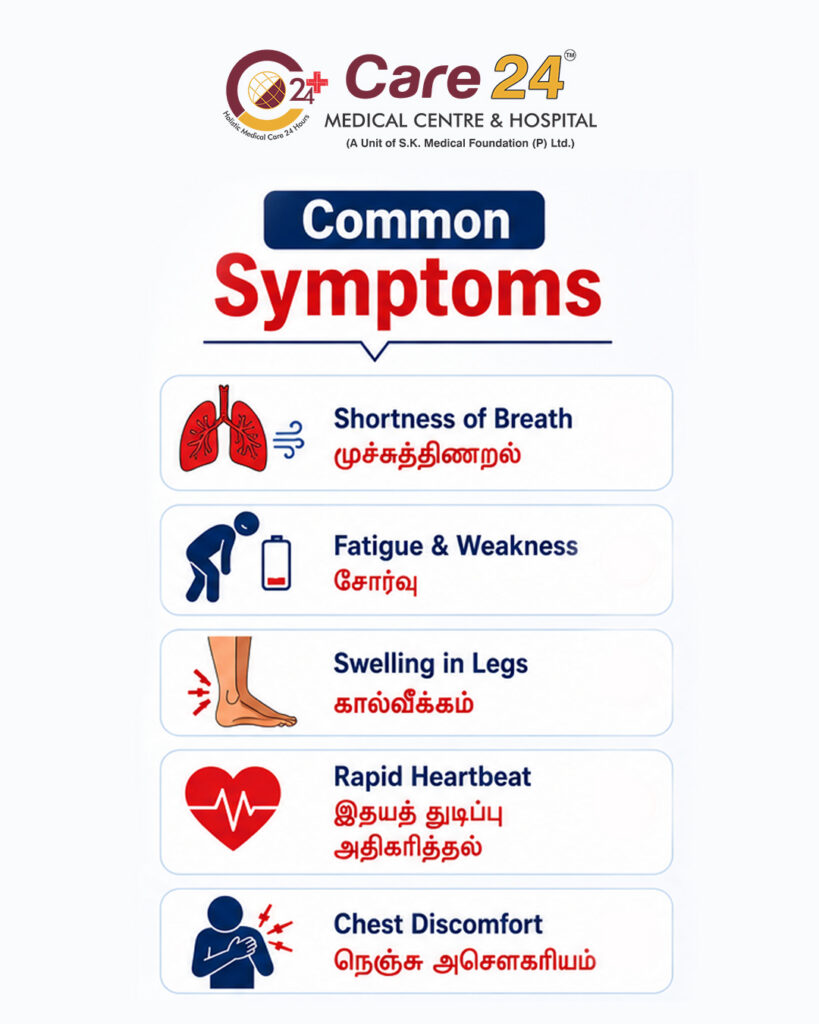
Early-stage cardiomyopathy may not cause noticeable symptoms. As the disease progresses, common warning signs include:
Shortness of Breath
Breathlessness during walking, climbing stairs, or performing routine activities is often one of the earliest symptoms.
Fatigue
Reduced blood circulation limits oxygen delivery to the body, causing persistent tiredness and reduced stamina.
Swelling in the Legs and Feet
Fluid retention in the legs, ankles, and feet is a common sign of worsening heart function.
Irregular Heartbeat
Palpitations, skipped beats, or a racing heartbeat should always be evaluated by a cardiologist.
Chest Pain or Pressure
Some patients experience discomfort, tightness, or chest pain, particularly during physical activity.
Dizziness or Fainting
Reduced blood flow to the brain can cause dizziness, light-headedness, or fainting, especially in hypertrophic cardiomyopathy.
Who Is at Risk?
Your risk of developing cardiomyopathy is higher if you have:
A family history of cardiomyopathy
High blood pressure
Diabetes
Obesity
Thyroid disease
Previous heart attack
Excessive alcohol intake
Chronic stress
Viral heart infections
Individuals with these risk factors should consider regular heart health screenings even if they feel well.
How is Cardiomyopathy Diagnosed?
Early diagnosis plays a vital role in preventing complications.
Your cardiologist may recommend:
Electrocardiogram (ECG)
Evaluates the heart’s electrical activity and detects abnormal rhythms.
Echocardiogram
An ultrasound scan that assesses heart size, pumping function, valve health, and muscle thickness.
Exercise Stress Test
Measures how the heart performs during physical activity.
Cardiac MRI
Provides detailed images of the heart muscle and helps identify scarring or structural abnormalities.
Blood Tests
Help detect heart strain, infections, thyroid disorders, and other contributing conditions.
Genetic Testing
Recommended for individuals with a strong family history of inherited cardiomyopathy.
Treatment for Cardiomyopathy
Treatment depends on the type, severity, and underlying cause of the condition.
Lifestyle Changes
Healthy lifestyle modifications remain the foundation of treatment.
These include:
Following a heart-healthy diet
Limiting salt intake
Maintaining a healthy weight
Controlling blood pressure and diabetes
Avoiding smoking and alcohol
Medications
Your cardiologist may prescribe:
Beta-blockers
ACE inhibitors or ARBs
Diuretics
Blood thinners
Anti-arrhythmic medications
These medicines improve heart function, reduce symptoms, and lower the risk of complications.
Implantable Cardiac Devices
Some patients benefit from:
Pacemakers
Implantable Cardioverter Defibrillators (ICDs)
Cardiac Resynchronization Therapy (CRT)
These devices help regulate abnormal heart rhythms and improve heart function.
Advanced Procedures
In severe cases, advanced interventions such as catheter-based procedures or heart transplantation may be considered.
Regular follow-up with a cardiologist is essential to monitor disease progression and adjust treatment when necessary.
Living Well with Cardiomyopathy
Many people with cardiomyopathy enjoy active and fulfilling lives by following medical advice consistently.
Helpful lifestyle tips include:
Eat a low-sodium, heart-friendly diet.
Stay physically active as advised by your cardiologist.
Take medications exactly as prescribed.
Monitor your weight regularly.
Avoid excessive alcohol consumption.
Manage stress effectively.
Get adequate sleep.
Never miss scheduled follow-up appointments.
Why Early Diagnosis Matters
Detecting cardiomyopathy early significantly improves long-term outcomes.
Early treatment can help:
Improve heart function
Delay disease progression
Prevent heart failure
Reduce the risk of stroke
Prevent dangerous arrhythmias
Enhance overall quality of life
Routine cardiac evaluations such as ECGs and echocardiograms are especially important for people with a family history or multiple risk factors.
When Should You See a Cardiologist?
Consult a heart specialist immediately if you experience:
Persistent shortness of breath
Unexplained fatigue
Swelling of the legs or feet
Chest pain
Palpitations
Dizziness or fainting
A family history of cardiomyopathy or sudden cardiac death
Prompt medical evaluation can prevent serious complications and improve treatment success.
Expert Cardiomyopathy Treatment at Care 24 Hospital, Erode
If you’re looking for an experienced Cardiologist in Erode, Care 24 Medical Centre & Hospital offers advanced diagnosis and comprehensive treatment for cardiomyopathy and other heart conditions.
Our cardiac services are led by Dr. P. Vijay, MD., DNB (Cardiology), FSCAI, Full-Time Cardiac & Interventional Cardiologist, who specializes in preventive cardiology, advanced cardiac imaging, heart failure management, and interventional procedures.
Our Cardiac Services Include:
Comprehensive Heart Health Screening
ECG and Echocardiography
Advanced Cardiac Imaging
Cardiomyopathy Diagnosis & Treatment
Heart Failure Management
Preventive Cardiology
Interventional Cardiology
Lifestyle & Risk Factor Management
Long-Term Cardiac Follow-up
Whether you’re experiencing symptoms or simply want to assess your heart health, our experienced cardiology team is here to help.
Book an Appointment Today
Don’t ignore symptoms like breathlessness, swelling, fatigue, or irregular heartbeat. Early diagnosis can protect your heart and improve your quality of life.
Dr. P. Vijay, MD., DNB (Cardiology), FSCAI Full-Time Cardiac & Interventional Cardiologist
 Appointments: 90036 17736
 Website: https://www.care24hospital.in
 Care 24 Medical Centre & Hospital
Perundurai Road, Near Parimalam Mahal, Erode
Your heart deserves expert care. Schedule your cardiac evaluation today and take the first step toward a healthier future.