Healthy Heart Tips in Erode | World Heart Day 2026 – Care24
Our lives may be busy, but making time for our heart health is essential. Small, consistent changes can support better cardiovascular health over time.
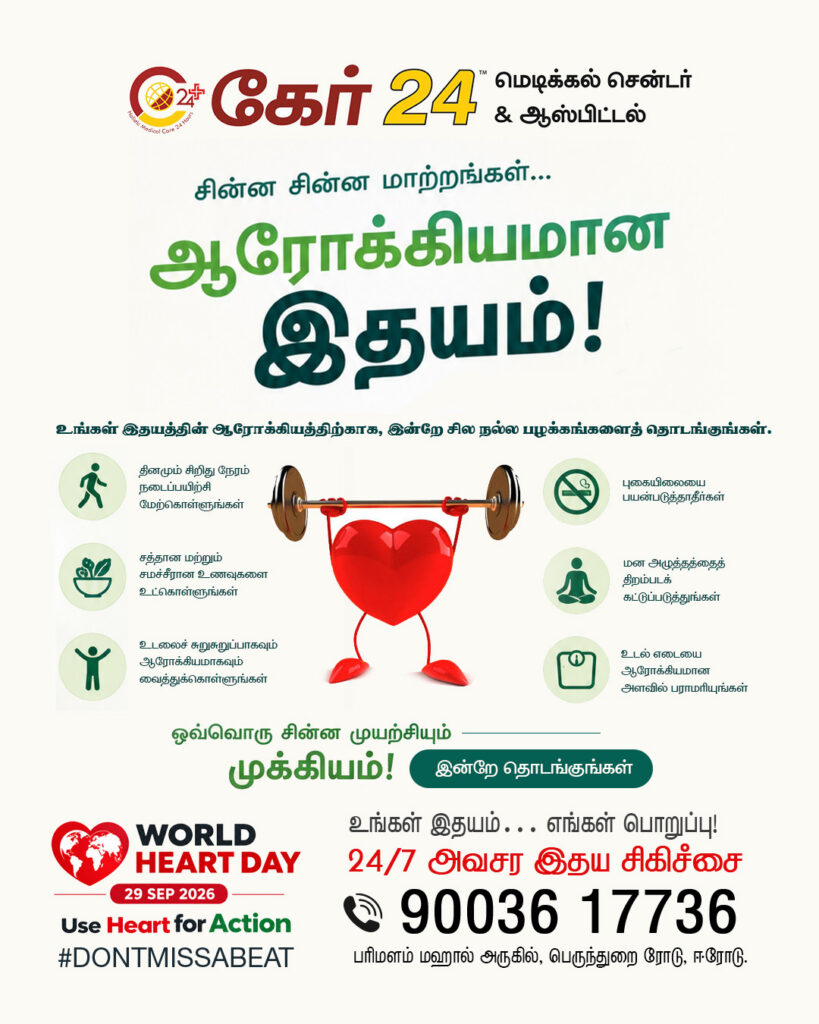
This World Heart Day, observed on 29 September 2026, Care24 Medical Center & Hospital, Erode, shares six simple habits that can help you take better care of your heart.
1. Walk Every Day
Aim for at least 150 minutes of moderate-intensity physical activity each week. For many people, this can mean around 30 minutes of activity on most days.
Regular physical activity can support cardiovascular fitness and help manage important heart-health factors such as blood pressure, blood sugar, cholesterol and body weight. The WHO physical activity recommendations provide guidance on activity levels for adults and older adults.
The NHLBI guide to physical activity and heart health also explains how regular movement can support cardiovascular health.
If you have an existing heart condition or are starting a new exercise programme after a period of inactivity, discuss the appropriate level of activity with your healthcare professional.
2. Eat a Balanced Diet
A heart-friendly diet can include vegetables, fruits, whole grains, pulses, nuts and other fibre-rich foods.
Try to limit excess salt, highly processed foods, free sugars and unhealthy fats. The WHO healthy diet guidance recommends a varied diet built around nutritious foods while limiting excess salt, free sugars and unhealthy fats.
For practical guidance specifically relevant to India, the WHO India healthy diet guidance explains the importance of dietary variety and balanced food choices.
The American Heart Association’s healthy eating guidance also provides information on building a heart-healthy eating pattern.
3. Stay Physically Active
Walking is one simple way to stay active, but physical activity can also include cycling, swimming, household activities, strength training, yoga or other activities that you enjoy.
Regular physical activity can help with weight management and support healthy blood pressure, blood cholesterol and blood sugar levels.
The CDC guidance on preventing heart disease highlights regular physical activity, healthy weight and not smoking as important parts of heart disease prevention.
The NHLBI heart-healthy physical activity guide provides additional information on getting started safely.
4. Avoid Smoking and Tobacco
Smoking and tobacco use can increase cardiovascular risk. Avoiding tobacco is one of the important steps you can take to protect your heart.
If you smoke, speak with a healthcare professional about evidence-based options that can support quitting.
The WHO tobacco and cardiovascular disease information explains the relationship between tobacco use and cardiovascular disease.
The CDC’s smoking and heart disease information also explains why smoking increases cardiovascular risk and why quitting is beneficial.
5. Manage Stress
Long-term stress can affect behaviours and health factors associated with cardiovascular risk. Making time for relaxation, physical activity, adequate sleep and supportive relationships may help with stress management.
Activities such as meditation, breathing exercises and yoga may be useful for some people.
The American Heart Association’s guidance on stress and heart health explains how stress and related behaviours can affect cardiovascular health.
The NHLBI stress-management guidance also provides practical approaches for managing stress in a heart-healthy way.
6. Monitor Your Weight and Heart-Health Numbers
Maintaining a healthy weight can help manage several cardiovascular risk factors. However, heart health is not determined by weight alone.
It is also important to know your blood pressure, blood cholesterol and blood sugar when recommended by your healthcare professional.
The American Heart Association’s Life’s Essential 8 includes diet, physical activity, nicotine exposure, sleep, body weight, cholesterol, blood sugar and blood pressure as key components of cardiovascular health.
The NHLBI heart-health numbers guide provides information about monitoring blood pressure, cholesterol, weight and other important health measurements.
Why Heart Health Matters for Erode Families
Heart health is important for every family. Risk factors such as high blood pressure, diabetes, high cholesterol, obesity, physical inactivity and tobacco use can increase cardiovascular risk.
The WHO cardiovascular disease information explains that addressing behavioural and other risk factors can help prevent cardiovascular disease.
Small, consistent lifestyle changes started today can contribute to better long-term cardiovascular health.
Care24’s Role in Heart Care
Care24 Medical Center & Hospital provides cardiac care for patients in Erode and surrounding areas.
You can learn more about the hospital through the Care24 Medical Center & Hospital home page, or explore the Cardiology Department at Care24 for information about cardiac consultations, diagnostic services and treatment.
Patients looking specifically for a cardiology consultation can learn more about Dr. P. Vijay, MD, DNB (Cardiology), FSCAI, Consultant – Full-Time Cardiac & Interventional Cardiologist.
Care24 also provides Cardio Intervention services for patients requiring specialist interventional cardiology care.
For appointments, consultation details and hospital directions, visit the Care24 Contact & Appointment page.
Care24 Medical Center & Hospital is located at No. 78/1-10, Perundurai Road, Near Parimalam Mahal, Erode – 638 012. The hospital website currently lists 24/7 emergency services and provides its current contact details.
Emergency Helpline: 90036 17736
Frequently Asked Questions
How many minutes of walking is enough for heart health?
For most adults, WHO recommends at least 150 minutes of moderate-intensity physical activity per week. This can be divided across several days according to your routine and health status.
Does stress affect heart health?
Stress can contribute to behaviours and health factors associated with cardiovascular risk. Healthy stress-management strategies, adequate sleep and regular physical activity can support overall cardiovascular health.
What foods are good for heart health?
A varied diet that includes vegetables, fruits, whole grains, pulses and other nutritious foods can support heart health. Limiting excess salt, free sugars and unhealthy fats is also recommended.
Should I check my blood pressure and cholesterol?
Regular monitoring may be appropriate depending on your age, health history and cardiovascular risk factors. Speak with a healthcare professional about which health measurements you should monitor.
Where can Erode residents get cardiac care?
Care24 Medical Center & Hospital in Erode provides cardiology services, cardiac diagnostics, interventional cardiology and emergency care. Visit the Cardiology Department or Contact Care24 for appointments and hospital information.
Medical disclaimer: This article is for general educational purposes only and does not replace professional medical evaluation, diagnosis or treatment.