How to Prevent Brain Injuries: A Practical Guide
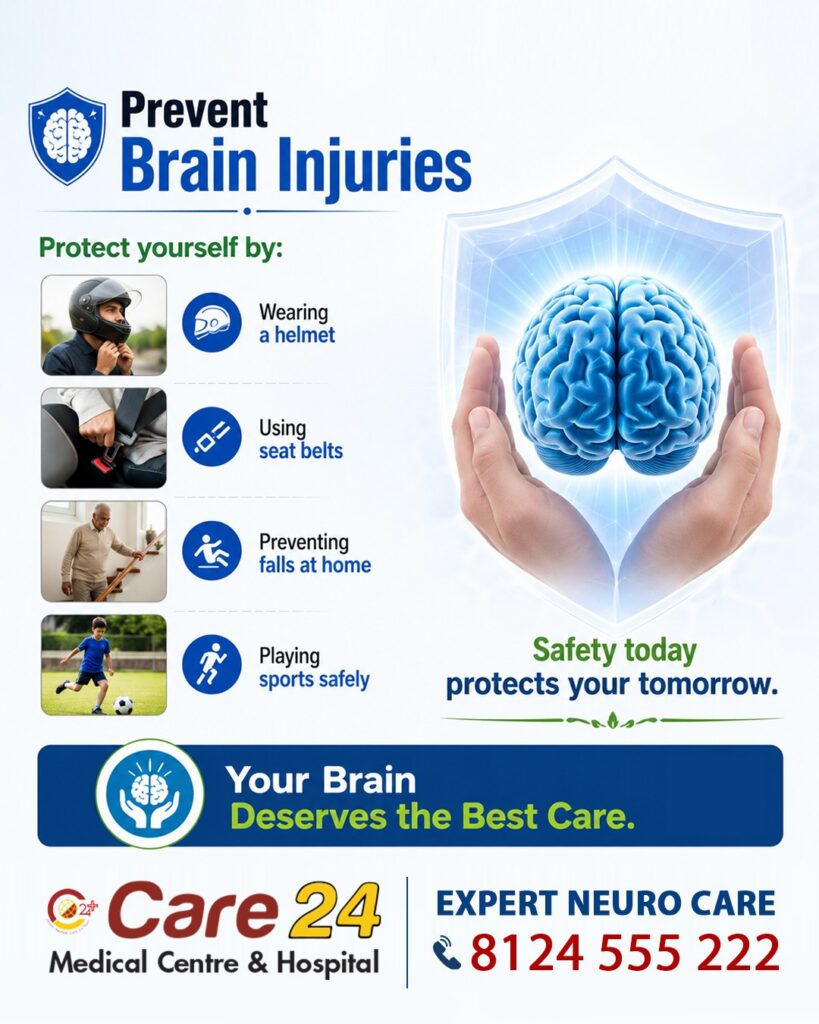
Brain injury prevention starts with simple safety habits. Wearing a helmet, using seat belts, preventing falls and following sports safety rules can help reduce the risk of traumatic brain injuries.
A traumatic brain injury (TBI) occurs when an external force, such as a road crash, fall or sports impact, damages the brain.
Brain Injury Prevention at a Glance
| Risk | Prevention | Who Benefits Most |
|---|---|---|
| Two-wheeler crashes | Wear a properly fitted and fastened helmet | Riders and pillion passengers |
| Car collisions | Use seat belts and appropriate child restraints | All passengers |
| Falls at home | Use handrails, improve lighting and keep floors clear | Older adults and young children |
| Sports injuries | Use appropriate protective equipment and follow safety rules | Children, teenagers and athletes |
1. Wear a Helmet
Wearing a properly fitted and fastened helmet can help protect the head during a crash.
The WHO helmet safety guidance explains how quality helmets can reduce the risk of death and brain injury in road crashes.
Choose a helmet that meets applicable safety standards, fits securely and has a properly fastened chin strap. Helmets should be worn by both riders and pillion passengers.
The WHO road safety guidance for India also highlights helmet and seat-belt use as important road-safety measures.
For additional practical information, the CDC traumatic brain injury prevention guide provides safety recommendations for helmets, vehicles and recreational activities.
For maximum protection, replace a helmet after a significant impact or when it becomes damaged.
2. Use Seat Belts
Seat belts help keep occupants inside the vehicle and reduce the risk of being thrown from the vehicle or hitting the interior during a collision.
Everyone in the vehicle should use a seat belt, including passengers in the rear seats.
The WHO road traffic injury guidance reports that seat-belt use can substantially reduce the risk of death among vehicle occupants.
Children should travel using an age- and size-appropriate child restraint system according to applicable safety recommendations.
Parents can also refer to the CDC HEADS UP child motor vehicle safety guidance for information about child restraints, booster seats and seat belts.
3. Prevent Falls at Home
Falls can cause serious head injuries, particularly among older adults and young children.
Simple measures can make the home safer:
Install handrails on stairs.
Keep walkways and floors free from clutter.
Use adequate lighting, especially on stairs and corridors.
Use non-slip surfaces in bathrooms.
Secure loose rugs and floor mats.
Keep frequently used items within easy reach.
Use appropriate safety measures around young children.
The CDC fall prevention guidance recommends measures such as improving home safety, using stair railings, adding bathroom grab bars and improving lighting.
Older adults and caregivers can also use the CDC STEADI fall prevention resources to learn about fall-risk screening and prevention.
The CDC patient and caregiver fall-prevention resources provide additional practical materials for older adults and families.
For healthcare professionals and organisations, the CDC STEADI clinical resources provide tools for assessing and addressing fall risk.
4. Play Sports Safely
Sports can involve falls, collisions and impacts to the head. Using appropriate protective equipment and following sport-specific safety rules can help reduce injury risk.
For example, players should use suitable helmets and protective equipment where required by the sport.
The CDC HEADS UP concussion prevention guidance provides practical safety information for children participating in sports and recreational activities.
If someone develops symptoms after a head impact, such as headache, dizziness, confusion, vomiting or unusual behaviour, they should stop playing and receive appropriate medical assessment.
A player should return to sport only when medically appropriate and according to professional guidance. The CDC return-to-sports guidance explains the gradual return-to-play process following a concussion.
When Prevention Isn’t Enough
Even with safety precautions, accidents can happen.
After a head injury, seek urgent medical attention if the person develops symptoms such as:
Severe or worsening headache
Repeated vomiting
Confusion or unusual behaviour
Seizures
Loss of consciousness
Weakness or numbness
Difficulty speaking or walking
Increasing drowsiness
Changes in vision
If you are concerned about a significant head injury, prompt medical assessment is important.
At Care 24 Medical Centre & Hospital, Erode, patients can access Emergency & Trauma Care, Neurology & Neuro Intervention and Advanced Radiology & Imaging services.
For neurosurgical conditions requiring specialist evaluation, Care 24 also provides Advanced Brain & Spine Surgery.
Key Takeaway
Brain injury prevention begins with everyday safety. Wear a properly fitted helmet, use seat belts, make your home safer and follow appropriate sports precautions.
If a head injury occurs, do not ignore concerning symptoms. Seek medical evaluation when needed so that potential complications can be identified and treated appropriately.
Frequently Asked Questions
How can brain injuries be prevented?
Brain injury prevention includes wearing helmets during two-wheeler travel and appropriate sports, using seat belts, preventing falls at home and following safety rules during physical activities.
Are helmets effective in preventing brain injuries?
A properly fitted and correctly worn helmet can help protect the head during certain crashes and impacts. It should be used together with other road-safety measures.
How can I prevent head injuries from falls at home?
Improve lighting, keep floors and walkways clear, install handrails on stairs and use non-slip surfaces in areas such as bathrooms.
What should I do after a sports-related head injury?
Stop the activity and seek medical assessment if symptoms develop. Do not return to play until it is considered medically appropriate.
When should I seek emergency care after a head injury?
Seek urgent medical attention for symptoms such as loss of consciousness, repeated vomiting, seizures, severe or worsening headache, confusion, weakness or increasing drowsiness.
Medical disclaimer: This article is for general educational purposes only and does not replace professional medical evaluation, diagnosis or treatment.