
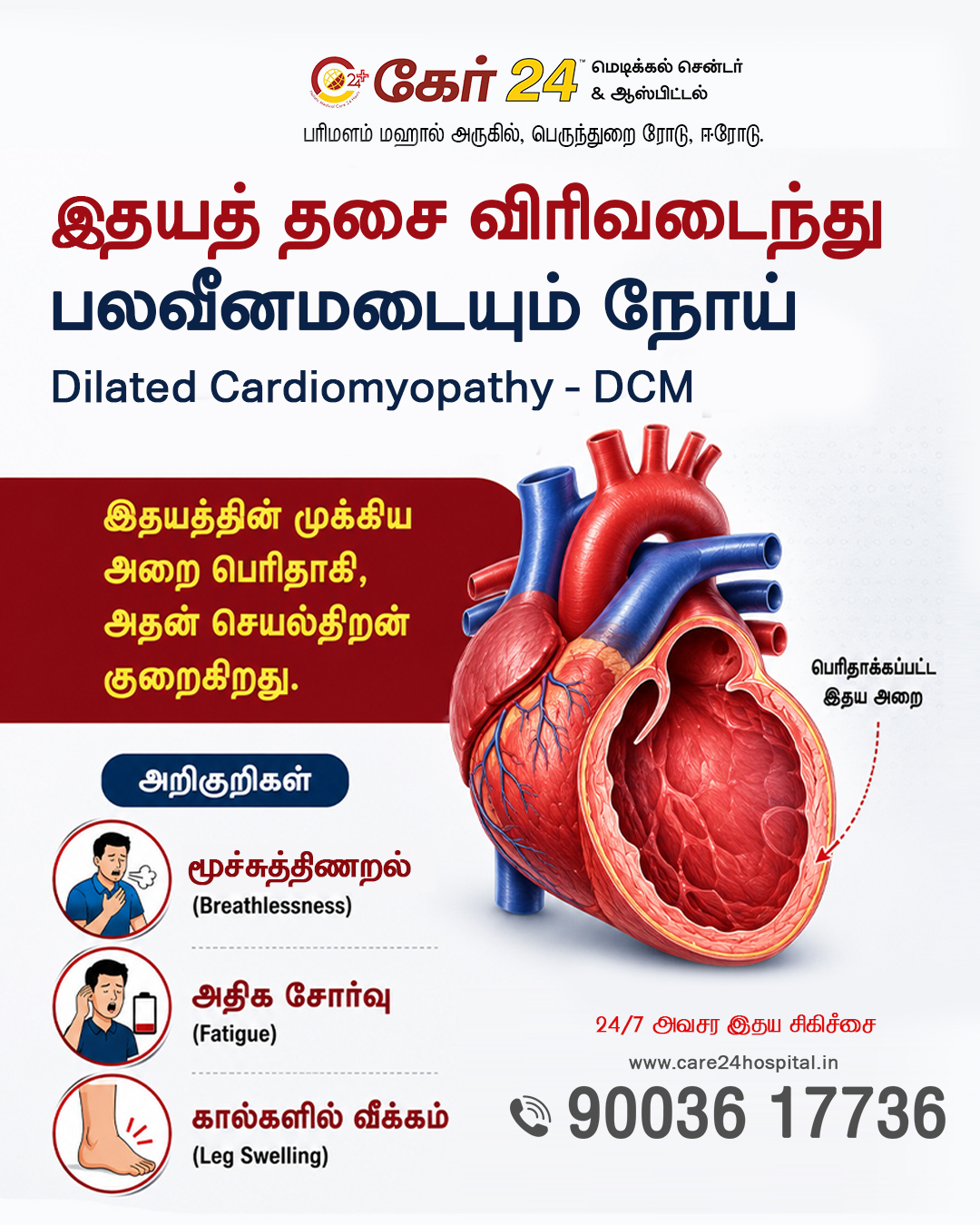
Dilated Cardiomyopathy: Symptoms, Causes, Diagnosis & Treatment
Dilated Cardiomyopathy (DCM) is one of the most common heart muscle diseases that affects the heart’s pumping function. Dilated Cardiomyopathy can develop gradually and, if left untreated, may lead to heart failure, abnormal heart rhythms, or other serious complications.
The good news is that early diagnosis, proper treatment, and regular follow-up can help many people with Dilated Cardiomyopathy live healthy and active lives.
At Care 24 Medical Centre & Hospital, Erode, Dr. P. Vijay, MD., DNB (Cardiology), FSCAI, Full-Time Cardiac & Interventional Cardiologist, provides comprehensive evaluation and personalized treatment for patients with Dilated Cardiomyopathy and other heart conditions.
What is Dilated Cardiomyopathy?
Dilated Cardiomyopathy (DCM) is a condition in which the heart’s main pumping chamber, known as the left ventricle, becomes enlarged and weakened. As the chamber stretches beyond its normal size, the heart muscle loses its strength and cannot contract effectively.
Because of this reduced pumping ability, less oxygen-rich blood reaches the body’s organs and tissues. Over time, the heart works harder to compensate, increasing the risk of:
- Heart failure
- Fluid buildup in the lungs
- Swelling in the legs and ankles
- Abnormal heart rhythms (arrhythmias)
- Blood clots
- Stroke
Without appropriate treatment, Dilated Cardiomyopathy can gradually worsen and significantly affect a person’s quality of life.
How Does Dilated Cardiomyopathy Affect the Heart?
A healthy heart contracts powerfully to circulate blood throughout the body. In Dilated Cardiomyopathy, the enlarged heart muscle becomes thin and weak, reducing its ability to pump blood effectively.
As the condition progresses, the heart experiences:
- Reduced pumping strength (reduced systolic function)
- Enlargement of one or both ventricles
- Increased pressure inside the heart
- Fluid accumulation in the lungs and legs
- Greater risk of irregular heart rhythms
- Progressive heart failure if left untreated
The severity of symptoms varies depending on how much the heart’s pumping ability has declined.
Dilated Cardiomyopathy vs. Hypertrophic Cardiomyopathy
Although both conditions affect the heart muscle, they are very different.
| Feature | Dilated Cardiomyopathy (DCM) | Hypertrophic Cardiomyopathy (HCM) |
|---|---|---|
| Heart Muscle | Enlarged and weakened | Thickened and stiff |
| Main Problem | Reduced pumping ability | Reduced filling or obstruction to blood flow |
| Common Cause | Genetics, infections, alcohol, hypertension | Usually inherited |
| Pumping Function | Reduced | Often preserved initially |
| Typical Age | Usually adults but can occur at any age | Often diagnosed in younger individuals |
Understanding the difference helps cardiologists choose the most appropriate treatment for each patient.
Understanding Ejection Fraction in Dilated Cardiomyopathy
One of the most important measurements used to evaluate Dilated Cardiomyopathy is the Ejection Fraction (EF). This measures the percentage of blood pumped out of the left ventricle with each heartbeat.
A healthy heart generally has an ejection fraction of 55% or higher.
Mildly Reduced EF
The heart’s pumping ability is only slightly affected. Many patients have few or no noticeable symptoms.
Moderately Reduced EF
Breathlessness, fatigue, and reduced exercise tolerance become more noticeable. Medical treatment is usually required.
Severely Reduced EF
A significantly reduced EF increases the risk of heart failure, dangerous arrhythmias, and hospitalization. Advanced treatments or implantable cardiac devices may be recommended.
The encouraging news is that many patients experience improvement in their ejection fraction with early diagnosis, appropriate medication, healthy lifestyle changes, and regular follow-up.
Dilated Cardiomyopathy Symptoms
The symptoms of Dilated Cardiomyopathy often develop slowly and may be mistaken for normal tiredness or ageing during the early stages.
Common symptoms include:
Shortness of Breath
Breathlessness during walking, climbing stairs, exercising, or even while resting may indicate reduced heart function.
Persistent Fatigue
When the heart cannot pump enough oxygen-rich blood, everyday activities become increasingly exhausting.
Swelling in the Legs and Feet
Fluid retention in the ankles, feet, and lower legs is a common sign of worsening heart function.
Heart Palpitations
Some people experience rapid, fluttering, or irregular heartbeats due to disturbances in the heart’s electrical activity.
Chest Pain
Pressure, discomfort, or chest pain should never be ignored and requires prompt medical evaluation.
Dizziness or Fainting
Reduced blood flow to the brain may cause dizziness, light-headedness, or fainting, especially during physical activity.
What Causes Dilated Cardiomyopathy?
Dilated Cardiomyopathy may develop due to inherited conditions, medical disorders, infections, or lifestyle-related factors.
Common causes include:
- Family history of Dilated Cardiomyopathy
- Coronary artery disease
- Long-standing high blood pressure
- Viral infections affecting the heart muscle
- Heavy alcohol consumption
- Certain recreational drugs
- Diabetes
- Thyroid disorders
- Nutritional deficiencies
- Pregnancy-related cardiomyopathy (Peripartum Cardiomyopathy)
- Certain chemotherapy medications
In many individuals, the exact cause cannot be identified. This is known as Idiopathic Dilated Cardiomyopathy.
Who Is at Risk of Dilated Cardiomyopathy?
Your risk may be higher if you have:
- A family history of heart muscle disease
- High blood pressure
- Previous heart attack
- Diabetes
- Thyroid disease
- Obesity
- Long-term alcohol use
- Viral myocarditis
- Previous chemotherapy treatment
People with these risk factors should consider regular cardiac screening to detect heart problems early.







ExoWatts
Great content! Keep up the good work!